
 By Salary by Career

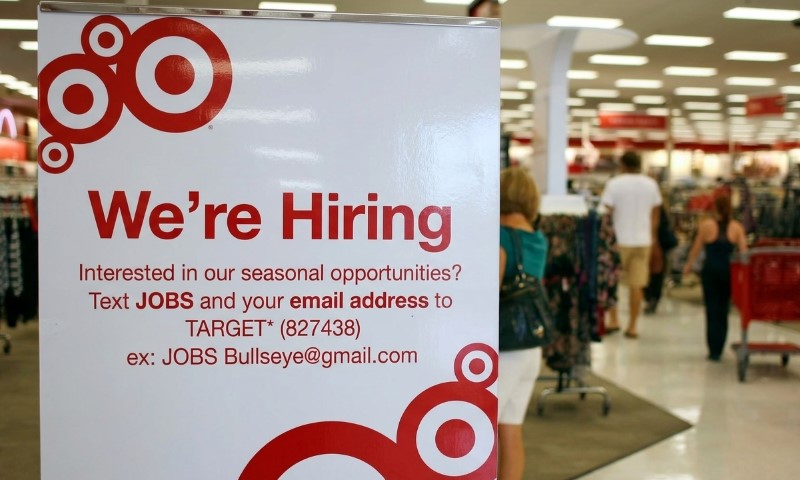
Holiday shopping usually brings crowded stores, longer checkout lines, and thousands of temporary workers looking to earn extra money before Christmas.
Yet retailers are preparing for the 2026 rush with fewer new employees, even as more Americans search for seasonal jobs.
U.S. retailers are expected to add approximately 450,000 jobs during the fourth quarter of 2026, a 2.5% decline compared with 461,500 in 2025, according to Challenger, Gray & Christmas.
Last year’s hiring gain was already the smallest since 2008.
Outplacement & Career Transitioning Services
Fewer holiday jobs might suggest retailers expect shoppers to spend less. Yet another explanation deserves attention.
Companies may have figured out how to handle their busiest season without hiring as many temporary employees.
Retailers Are Cutting Hiring Costs, but There’s a Trade-Off
Hiring extra employees costs more than their hourly wages. Recruitment, training, scheduling, and payroll administration all add expenses before a temporary worker handles their first customer.
Another estimate puts holiday hiring in perspective. NRF expects retailers to recruit between 325,000 and 375,000 seasonal employees in 2026, compared with approximately 356,000 last year.
Unlike Challenger’s fourth-quarter employment figures, NRF measures seasonal hiring plans. Neither estimate suggests a major recruitment boom, although they count different things.
With tariffs, operating costs, and uncertain consumer spending putting pressure on budgets, retailers have good reasons to reconsider those expenses.
Instead of recruiting large temporary teams, more businesses are relying on existing employees, flexible schedules, and on-demand workers. Some are also hiring part-time employees who can continue working after the holidays.
Consider a retailer expecting a six-week shopping rush. Adding 20 temporary employees at $16 an hour for 25 hours weekly would cost $48,000 in wages alone. Payroll taxes, training, and other employment expenses would push the total higher.
Reducing that temporary workforce by five employees would save $12,000 in direct wages under the same assumptions. Those savings make financial sense if existing employees can cover the workload.
View this post on Instagram
Problems begin when customer demand exceeds available staffing. Longer checkout lines, delayed order fulfillment, and exhausted employees can quickly undermine the benefits of a smaller payroll.
Not every major employer is reducing recruitment.
Amazon’s October 2026 hiring announcement outlined plans to recruit more than 300,000 workers across seasonal, part-time, and full-time positions. UPS also announced plans to hire more than 100,000 seasonal employees nationwide.
Those figures cover different job categories and should not be treated as additions to Challenger’s retail forecast. Still, they demonstrate that demand for holiday labor has not disappeared.
More Americans Are Searching for Seasonal Work
Retailers may be hiring cautiously, but workers are showing greater interest in temporary employment.
According to Indeed Hiring Lab’s October 2026 analysis, seasonal job postings were 10% higher year over year as of September 30. Desktop searches for seasonal and holiday positions increased 28% over the same period.
Those numbers tell different stories. Postings measure advertised opportunities, while searches measure job seekers’ activity, not the number of people hired.
Indeed also tracks opportunities across several industries, while Challenger’s forecast focuses specifically on retail employment gains.
Growing interest in seasonal employment suggests more workers are looking for additional income. However, a 28% increase in searches does not necessarily mean 28% more individual applicants.
Holiday Jobs Are Moving Away From Store Floors
Retail still accounts for most seasonal openings, but its share is declining.
In 2019, approximately 66% of seasonal job postings were retail positions. That share fell to around 61% in 2026.
Meanwhile, loading and stocking positions increased their share of seasonal postings to approximately 9%, compared with 3.5% in 2019.
Growing demand for warehouse and fulfillment workers makes sense as online shopping creates additional work behind the scenes.
For job seekers, however, advertised hourly pay tells only part of the financial story.
A position paying $18 an hour for 15 hours weekly produces $270 before taxes. Another offering $16 an hour for 30 hours generates $480.
Someone trying to cover holiday expenses may find the second position considerably more useful, despite its lower hourly wage.
Guaranteed hours, shift availability, and employment duration can matter more than a slightly higher advertised rate.
Holiday Hiring Caution Isn’t New
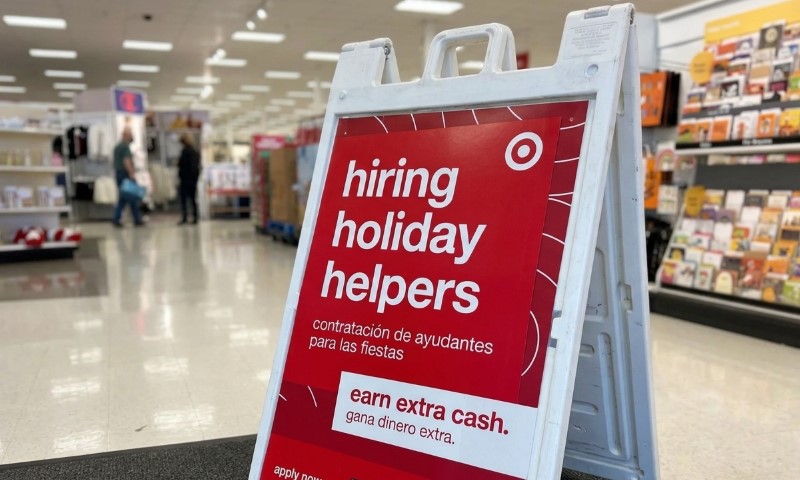
Retailers were already reconsidering seasonal recruitment several years ago.
In September 2023, Challenger forecast 410,000 additional retail jobs for the holiday quarter, citing concerns about labor costs and uncertain consumer demand.
Hiring subsequently reached 543,100 in 2024 before declining to 461,500 in 2025. Another reduction to the projected 450,000 in 2026 would represent a decline of approximately 17% compared with 2024.
One important distinction matters here. Challenger’s figures measure fourth-quarter employment gains using non-seasonally adjusted government data. They are not a direct count of every temporary worker recruited during the holidays.
Employers also appear increasingly comfortable postponing hiring decisions until customer demand becomes clearer.
Waiting reduces the risk of paying employees during unexpectedly slow periods. However, recruiting too late creates another problem if retailers cannot find and train enough workers before sales accelerate.
Smaller hiring plans may therefore signal changing workforce management practices as much as concerns about consumer spending.
Fewer Hires Don’t Necessarily Mean Fewer Shoppers
Reduced seasonal recruitment does not automatically predict disappointing holiday sales.
Consumer budgets offer another reason not to confuse smaller hiring plans with weaker sales. Deloitte’s 2026 holiday survey found that shoppers expect to spend an average of $988 on retail goods, a 10% increase compared with last year.
Those are planned purchases rather than completed sales, but they suggest retailers may have plenty of customers to accommodate.
Retailers can handle growing sales with fewer new employees if staffing schedules, existing teams, and fulfillment operations are sufficiently efficient.
For workers counting on holiday income, though, the shift carries real consequences. Traditional store positions may become harder to secure, while warehouse, delivery, and logistics employers offer alternatives.
Retailers may have found ways to manage the holiday rush with fewer new employees. A more revealing question is how those savings hold up once stores get busy.
A smaller payroll looks good on a spreadsheet. Its real value depends on how much work employees can reasonably handle without disappointing customers.